

42 Times People Asked The Internet A Strange Question And Got An Answer That Was Even More Interesting
6. Why Are Saturn’s Rings Hundreds Of Thousands Of Miles Wide But Only Tens Of Meters Thick?
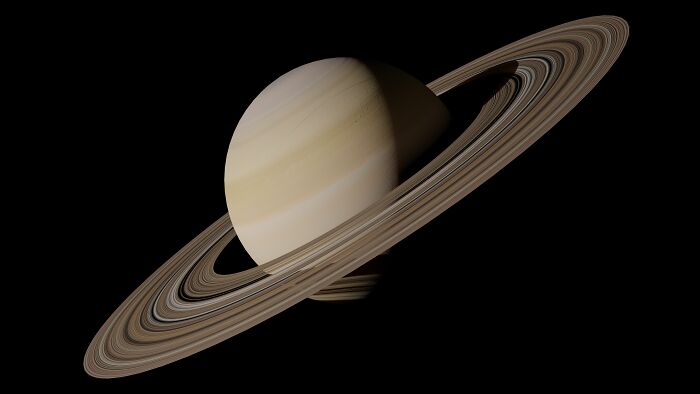
I was looking at pictures of Saturn and realized something I had never really thought about before. The rings are enormous, stretching hundreds of thousands of miles across, but they are incredibly thin compared with their size. It almost feels like a giant cosmic disk that somehow stays as a thin layer instead of spreading into a thick cloud around the planet. I assume gravity, orbital motion, and collisions have something to do with it, but I’m curious how all those pieces end up forming such a thin disk. What factors shape Saturn’s rings this way? Defiant-Junket4906: What helped me picture it is that the rings aren't really a giant solid disk. They're billions of individual particles, and each one is basically in orbit around Saturn. Saturn's gravity keeps the particles bound, while collisions tend to reduce their random motion, especially motion perpendicular to the ring plane. That makes the system settle into something more like a very thin swarm than a thick cloud. The crazy part is that something 175,000 miles across can still have a typical thickness of only around 10 meters.